Freezer Repair
Understanding the problem
Freezer trouble tends to show up in two ways. Either food softens and ice cream turns grainy, or frost spreads across the walls and the unit seems to run all the time. Both are worth taking seriously, since a freezer that cannot hold temperature puts everything inside at risk.
This service covers the freezer compartment of a refrigerator as well as standalone upright and chest freezers that many Charlotte homes keep in a garage, utility room or basement. Garage units in particular face summer heat that can push them toward their limits.
Warning signs in a freezer
- Ice cream that is soft or frozen food that bends instead of feeling solid
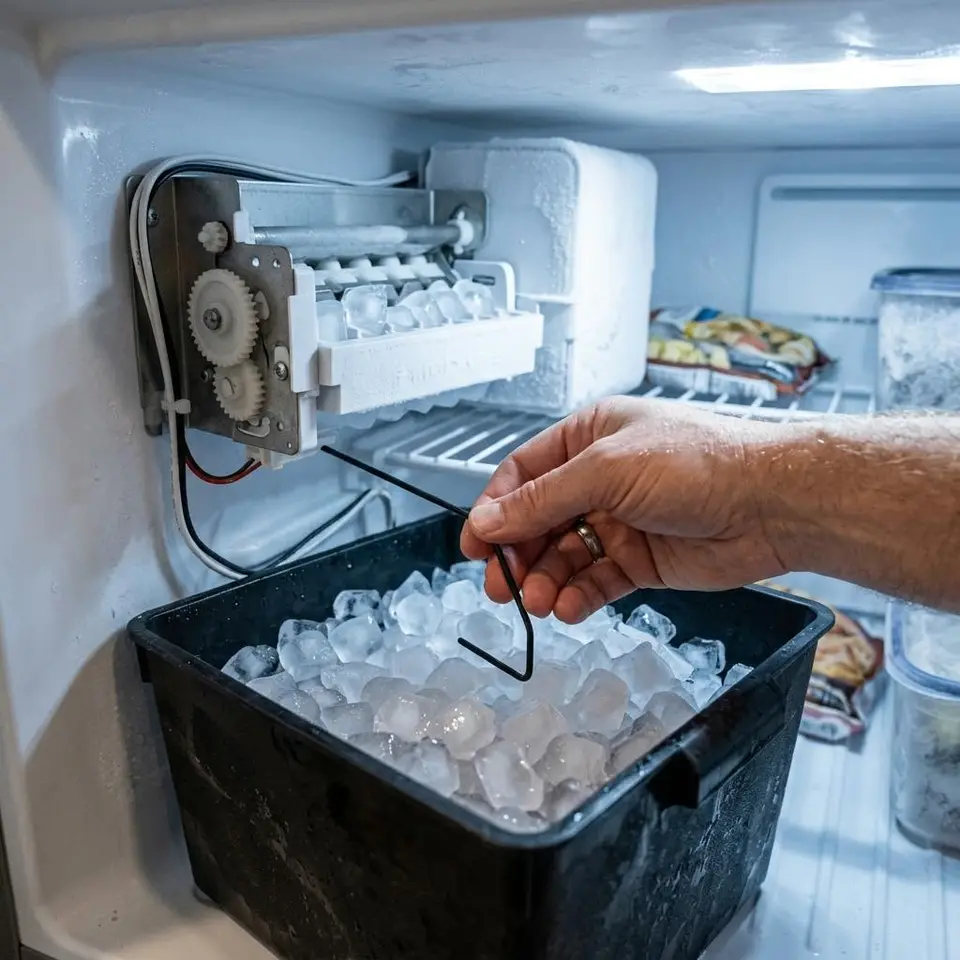
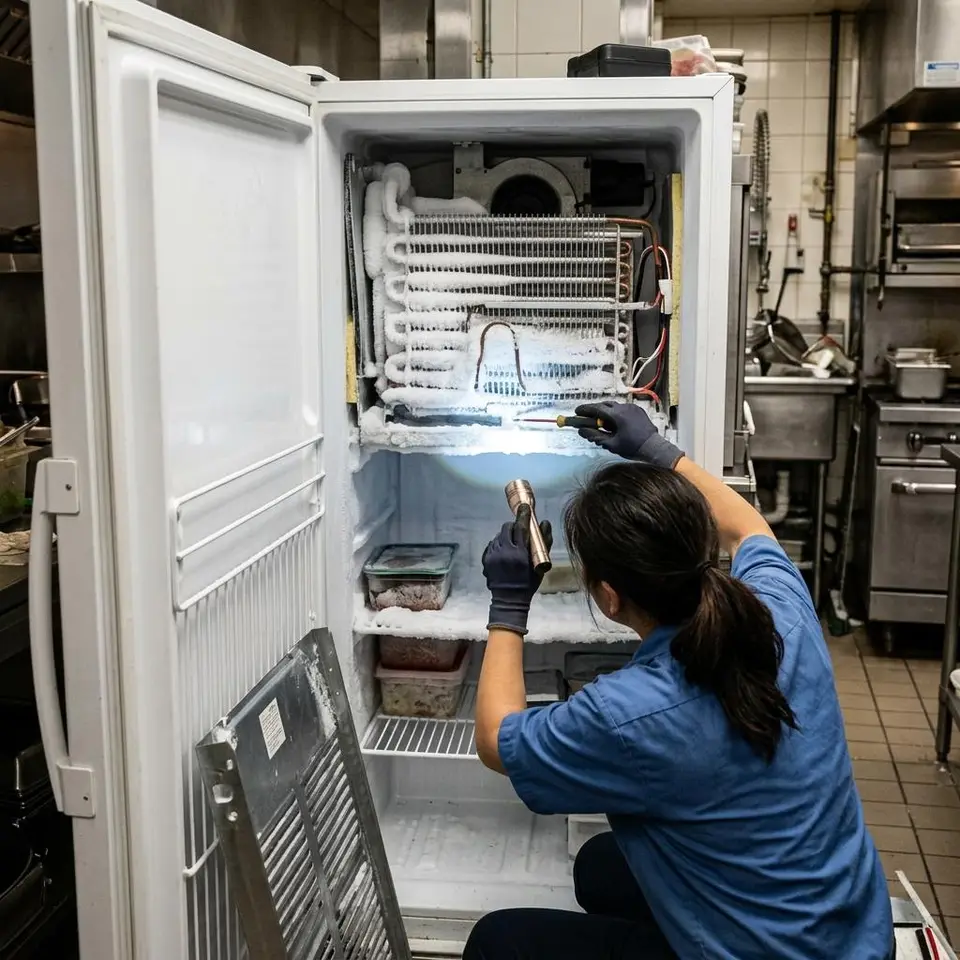
- Thick frost on the back wall, around the door or covering the evaporator panel
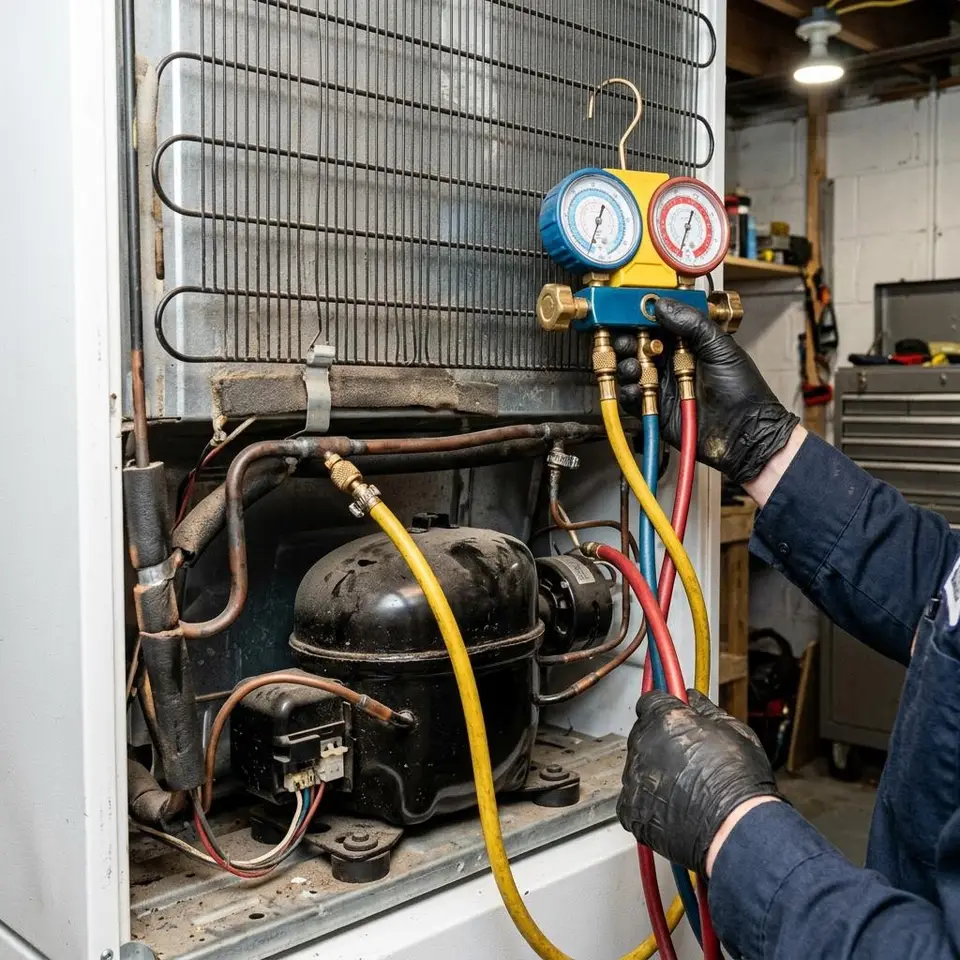
- The freezer runs constantly and the outside cabinet feels unusually warm
- A fan that is noisy, intermittent or completely silent
- The door does not close firmly or the seal shows gaps and tears
- A chest or upright freezer that will not start at all
What a freezer repair looks at
Frost buildup and defrost faults
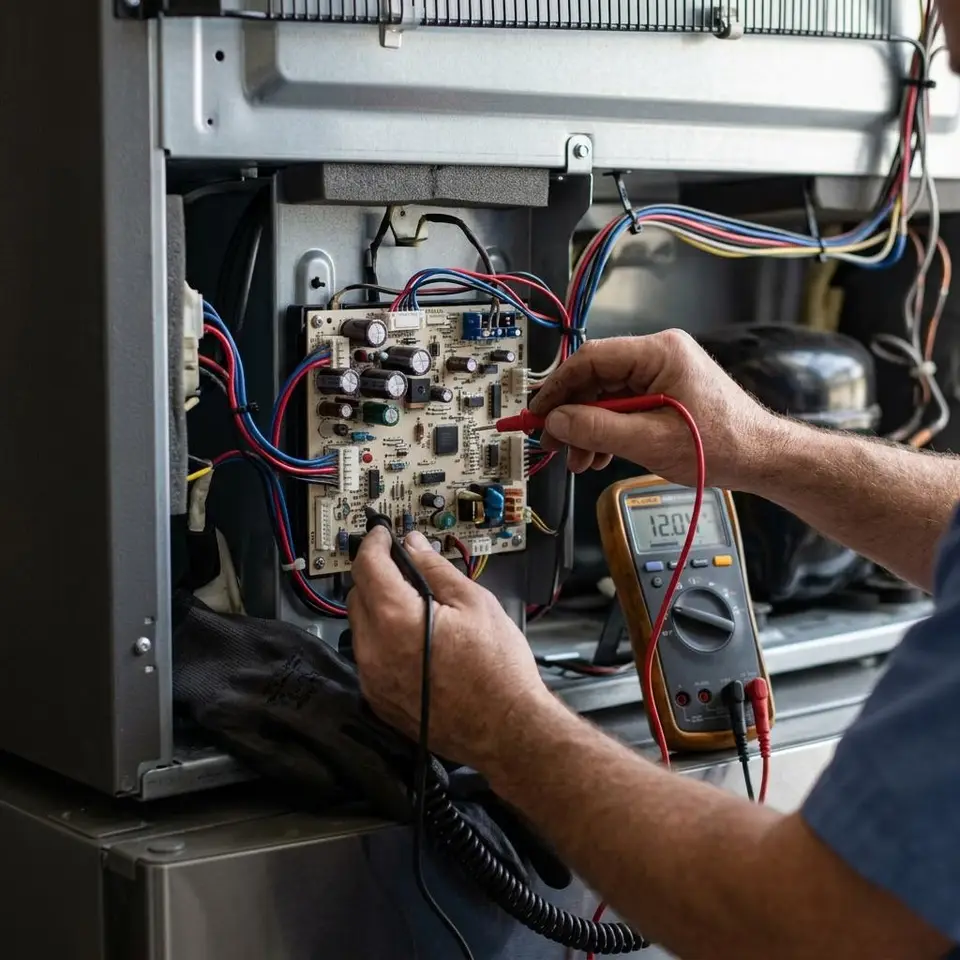
Heavy frost on the evaporator usually means the automatic defrost cycle is not completing. Defrost heaters, thermostats, sensors and control parts are tested to find which piece stopped doing its job.
Fans and airflow
The evaporator fan circulates cold air through the cabinet, and the condenser fan helps release heat outside. A failed fan can let the freezer drift warm even while the compressor keeps running.
Door gaskets and alignment
Freezers are sensitive to warm air leaks. A gasket that no longer seals, a sagging door or a hinge out of adjustment lets humidity in, which turns into frost and longer run times.
Standalone upright and chest freezers
Many standalone freezers use manual defrost and simpler controls, while others have the same frost free systems as a refrigerator. The diagnosis starts by identifying which type you have and how it is supposed to behave.
Protect your food while you wait
- Keep the door closed. A full freezer holds temperature longer than an empty one.
- Place an appliance thermometer inside so you know the actual temperature, not just how it feels.
- If frost is blocking the door seal, avoid chipping it with sharp tools.
- Move the most valuable items to another freezer or a cooler with ice if temperatures keep rising.