Ice Maker Repair
Understanding the problem
Ice makers are one of the most common reasons people call about a refrigerator that otherwise seems fine. The freezer still holds food solid, yet the bin stays empty, the cubes come out small and cloudy, or water drips somewhere it should not.
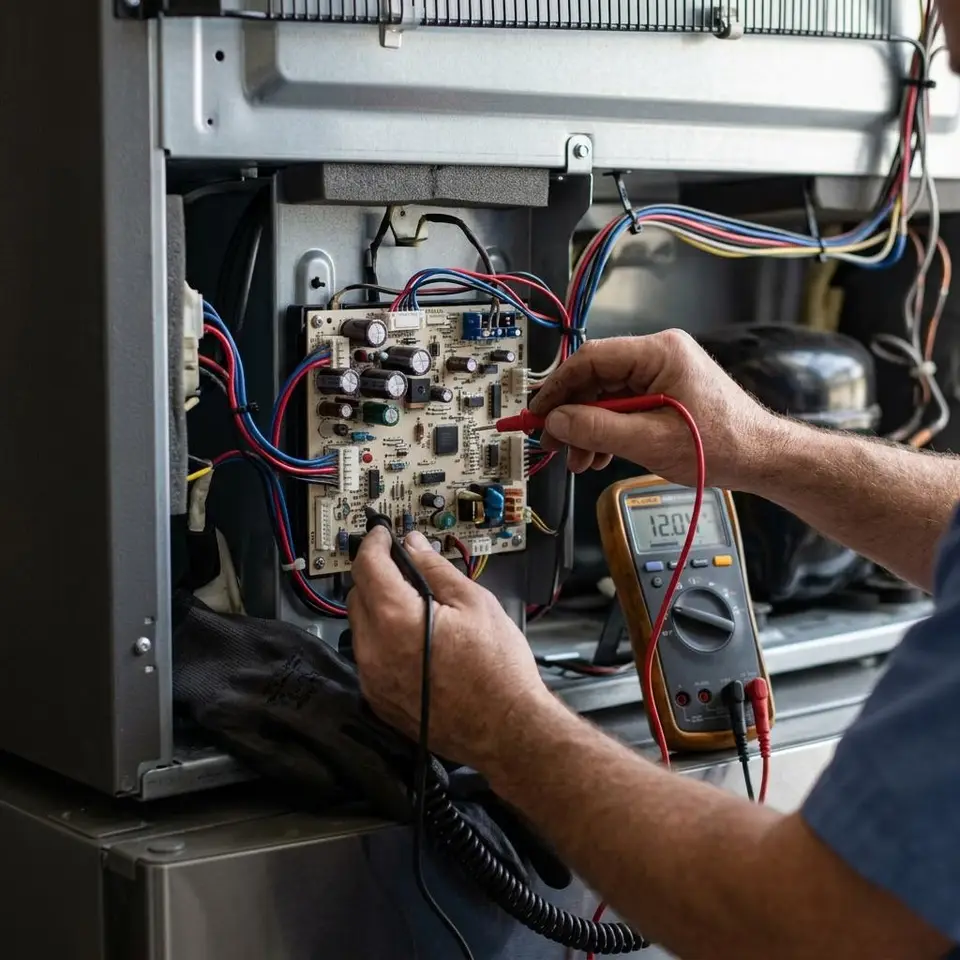
Because the ice maker shares water and cold air with the rest of the appliance, a good repair looks beyond the ice maker module itself. The water inlet valve, the supply line, the filter and the freezer temperature all affect how much ice you get and how it looks.
Common ice maker problems
- No ice at all, even though the freezer is cold and the arm or switch is in the on position
- Ice production has slowed to a handful of cubes a day
- Cubes are small, hollow or come out stuck together in clumps
- The ice maker cycles and you hear water, but nothing freezes or water overflows
- Ice dispenser chute is jammed, or the auger turns without pushing ice out
- Water dripping inside the freezer or leaking behind the refrigerator
What an ice maker repair involves
Water supply and inlet valve
The inlet valve opens briefly to fill the ice mold. Low household water pressure, a kinked supply line, a clogged filter or a weak valve can all mean too little water reaches the tray, which shows up as small or hollow cubes.
The ice maker module
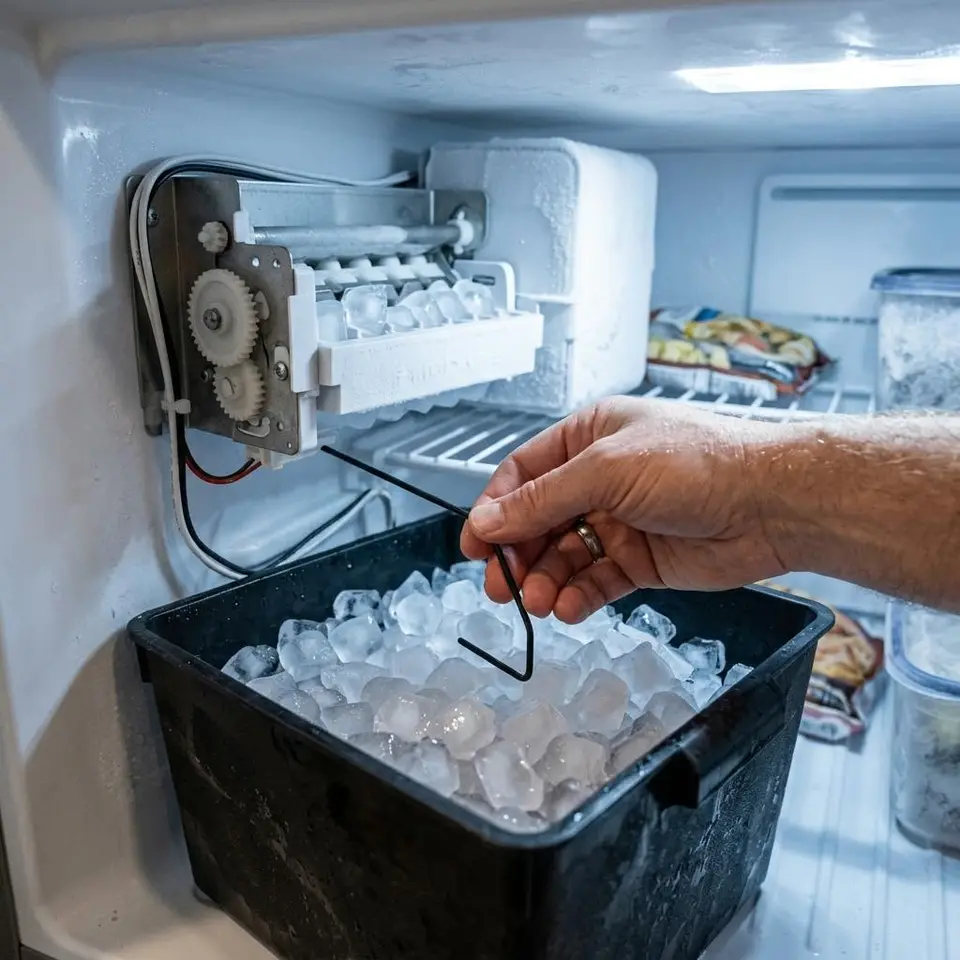
Inside the module, a motor, a thermostat or sensor and a heater work together to release cubes and start the next cycle. When the module fails, it may stop in the middle of a cycle or never begin one.
Freezer temperature
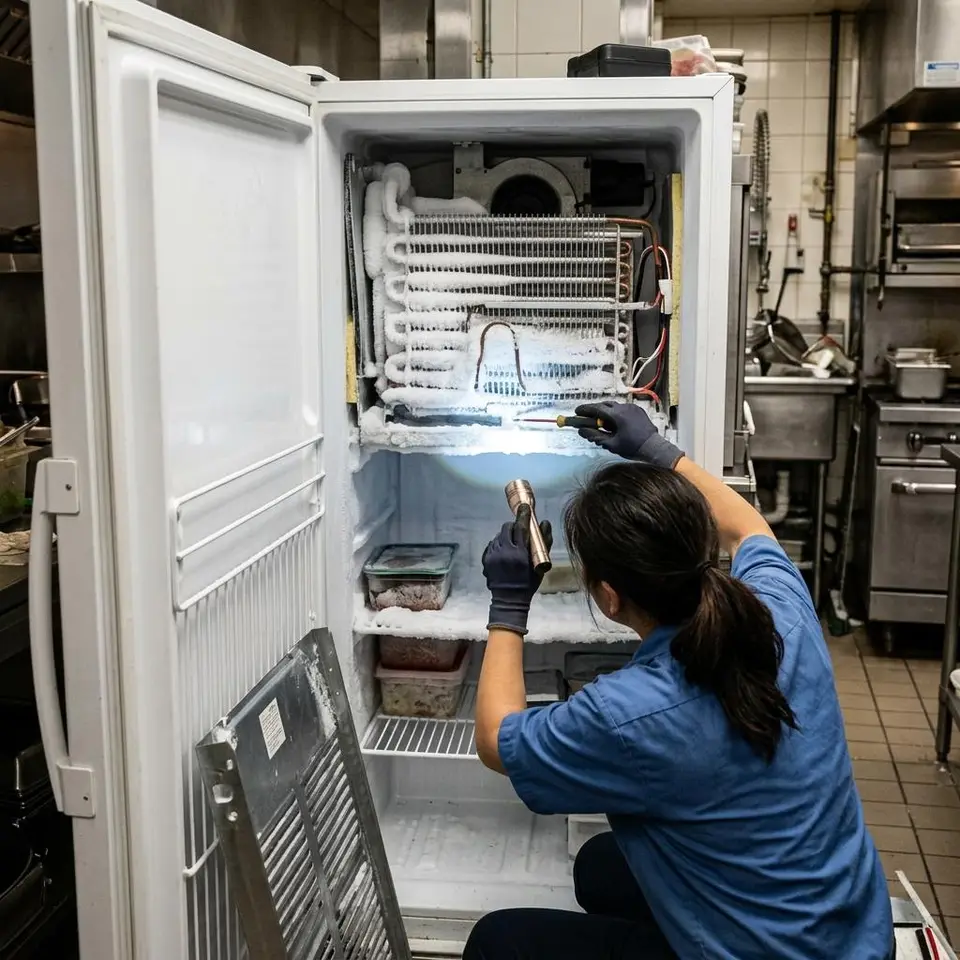
Most ice makers need the freezer to sit near zero degrees Fahrenheit to cycle normally. A freezer that runs warm because of airflow or defrost faults will slow or stop ice production, so the freezer itself is checked as part of the visit.
Dispenser and auger
Door dispensers use an auger motor, a chute door and switches. Clumped ice, a frozen fill tube or a worn auger can block delivery even when the ice maker is producing normally.
Simple checks you can make
- Make sure the ice maker is switched on and the bail arm or sensor is not held up by stored ice.
- Replace the water filter if it is past its recommended change interval.
- Check that the household water valve feeding the refrigerator is fully open.
- Empty and break up clumped ice in the bin, then give the ice maker a full day to recover.